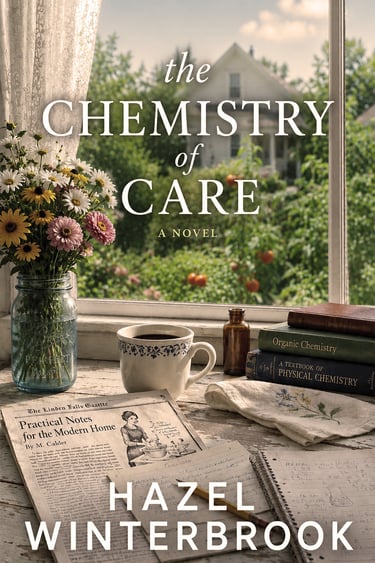
Dr. Margaret Calder has spent her life believing that if she worked hard enough, excellence would speak for itself. She couldn't have been more wrong.
When Bellweather Chemical removes Margaret from the laboratory she helped build and reassigns her to writing a household column for women, she finds herself trapped between the career she earned and the role the world expects her to accept. At thirty-seven, unmarried, and caring for her aging father as his memory slowly slips away, Margaret has little patience for being told to smile and discuss laundry.
Then her seventeen-year-old niece arrives on her doorstep with a duffel bag, nowhere else to go, and a secret she's desperate to hide.
Bea Halloran has fled her strict Georgia upbringing in search of something she can't quite name. Freedom, forgiveness, or perhaps simply a place where she can breathe. As summer settles over Vine Street, she begins transforming Margaret's neglected backyard into a garden while quietly carrying the weight of a choice that will change her future forever.
Next door, Connie Marchetti spends her days raising children, cooking Sunday gravy, and keeping her family stitched together through sheer force of will. When Margaret's newspaper column begins appearing in the local paper, Connie discovers something unexpected in its pages. A woman telling the truth.
As the seasons turn, three women from very different worlds find their lives woven together through shared meals, difficult conversations, unexpected friendship, and the ordinary acts of care that sustain us when everything else begins to fall apart.
Set against the changing landscape of 1960s America, The Chemistry of Care is a heartfelt novel about family, friendship, second chances, and the women whose quiet courage changes lives long before anyone thinks to write their names down.
Amazon